
The University of Idaho’s publication on Pacific Northwest ants (PNW 624) describes the household species most Kuna homeowners meet. Knowing which ant you have matters, because each kind nests, feeds and responds to treatment in its own way.
What pulls ants toward Kuna homes
Moisture in a dry place. The valley’s official weather station records hot, dry summers (NWS Boise). In Kuna, the damp spots stand out: Indian Creek and the greenbelt, canal laterals carrying New York Canal water, sprinkler-soaked lawns and drip lines around new landscaping. Ant colonies settle into that moist soil and then scout along foundations for food.
Fresh and older construction alike. Newer neighborhoods on former farm and sage ground have recently disturbed soil, young plantings and slab edges where ants travel easily. Downtown, the older homes and brick buildings near Main Street offer aged mortar joints, settled foundations and utility gaps that serve as quiet entry points.
Outbuildings and changing seasons. Sheds, barns and shops on acreage parcels hold feed, seed and clutter that ants are happy to forage through. When harvest wraps up, nights cool and irrigation water is shut off in fall, the ground dries out and some colonies may forage closer to houses.
Which ant is on your counter, slab or lawn?
- Odorous house ant. A very small, evenly brown to black ant that travels in busy lines along baseboards, counter edges and pipes. Crushed workers often give off a sour, coconut-like smell, though other ants can smell similar (PNW 624, full text). Colonies can hold many queens, which helps them spread.
- Pavement ant. Dark brown to blackish with fine grooves on the head and midsection. Look for small soil piles beside sidewalks, driveways and slab edges, and for winged swarms that sometimes appear indoors in spring.
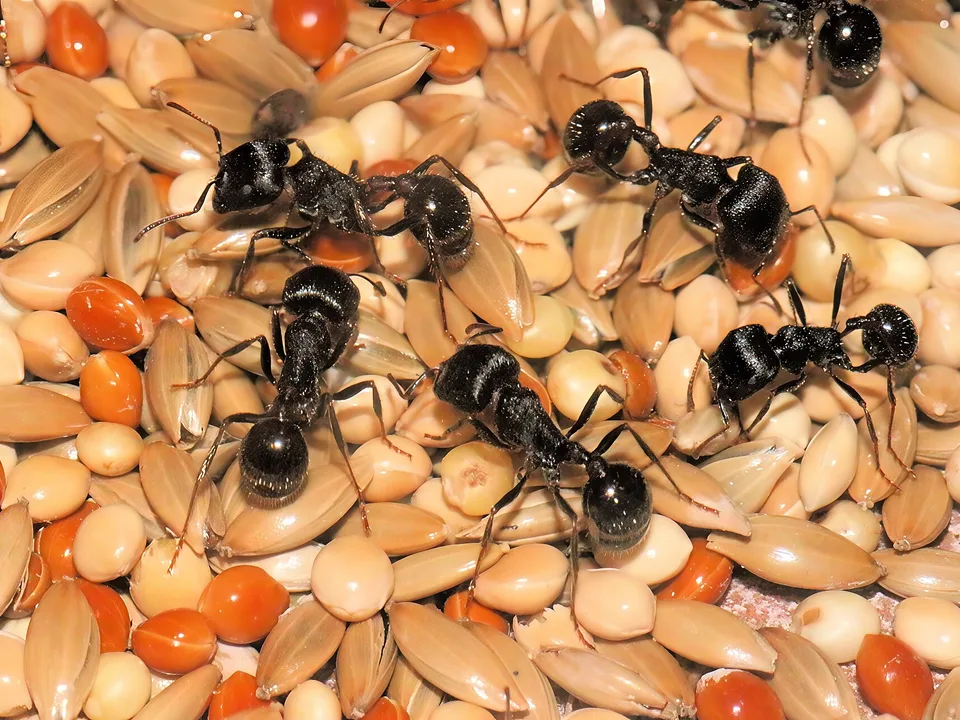
- Western harvester ant. Larger and reddish, most common where yards meet open sage ground. Colonies clear a bare circle around a mound of small pebbles. Unlike the other two, these ants can sting, and the sting is painful.
- Look-alikes are common. Many small ants resemble one another at a glance. A clear photo or a sample helps a licensed professional confirm the species before choosing an approach.
- Mostly a nuisance indoors. Odorous house ants and pavement ants are a cleanliness concern when they cross food areas, not a structural one.
Signs it’s time to call a professional
A single scout on the windowsill is not a crisis. It is worth getting help when lines of ants return day after day, show up in several rooms, appear to be coming from inside a wall or under flooring, or keep crossing places where you prepare food. A harvester mound near a play area, patio or dog run is another good reason, given the sting.
Describe what you are seeing and request a free quote. Requests are passed to a licensed local provider.
What licensed ant work usually includes
- Identifying the ant first. Odorous house ants, pavement ants and harvester ants each call for a different plan.
- Inspecting inside and out. A technician traces trails back toward the source, checking foundation edges, irrigation valve boxes, landscape borders, outbuildings and spots near laterals or the creek.
- Using bait where trails are active. The Pacific Northwest Insect Management Handbook describes bait as the most useful tool for ants inside structures, particularly odorous house ants, and notes it works gradually as workers share it with the colony (PNW Handbook).
- Keeping colonies from splitting. Disturbing a multi-queen nest or using a mismatched product can cause the colony to split into several new nests. Avoiding that outcome is a big part of why this work belongs with a licensed applicator.
- Checking results. A good provider confirms that the trails have actually stopped rather than assuming the job is done.