
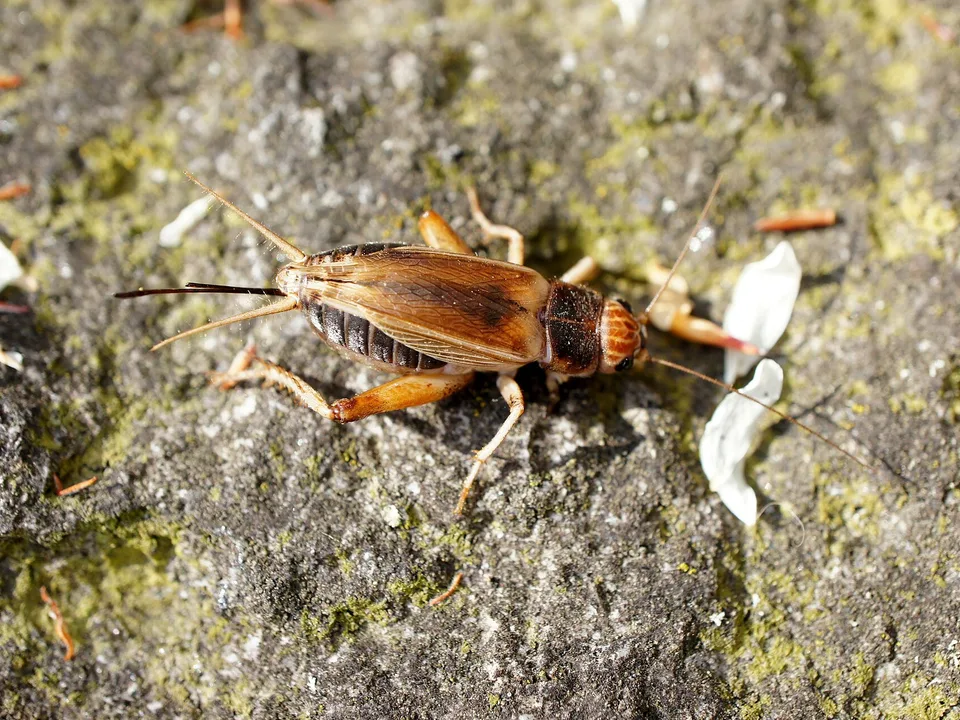
The brown field cricket in the photo is the type most households notice. It is a nuisance pest, not a dangerous one. When the same building fills with crickets every autumn, though, it usually means there is a steady source nearby and an easy way in.
How Kuna’s water, ground and seasons shape cricket activity
Kuna sits where irrigated green meets dry sage. The City describes the ground before the New York Canal opened in 1909 as a sage desert. Today, canal water runs through laterals and Indian Creek during the growing season, so lawns, parks, the greenbelt and farm edges stay damp and grassy while the open country to the south stays dry. Field crickets do best in that moist, weedy, well-fed strip.
Several local settings fit that pattern:
- Newer homes on former farm and sage ground. Fresh sod and young landscaping often border fields, laterals or open lots. Insects from that ground meet new foundations, garage doors and porch lights.
- Acreage and farm outbuildings. Barns, sheds and shops with stored feed, hay, boxes or equipment give crickets dark, sheltered corners close to fields.
- Older buildings downtown. Brick walls, aged door thresholds and basements near Main Street and the railroad can have small gaps that let wandering insects slip inside.
- The edge of town. Homes that back onto sagebrush or field margins may notice crickets moving toward the nearest lights and shelter after dark.
Fall brings the change. Harvest clears fields, nights cool, and irrigation is shut off. Crickets that spent the summer in green cover start looking for warmth and protection, and garages, outbuildings and foundations become the closest options.
How to recognize a field cricket
- Body. A sturdy insect, usually brown to nearly black, with antennae often as long as the body or longer and thick hind legs made for jumping.
- Tail end. Two slender feelers point backward from the rear. Females also carry a long, needle-like egg-laying tube between them. This is not a stinger.
- Sound. Adult males chirp by rubbing their wings together. Evening chirping from under a deck, inside a garage or along a foundation is often the first clue, especially in late summer.
- Habits. They hide by day in cracks, under clutter and along baseboards, then move around at night. They are drawn to outdoor lights.
- What they actually cause. Field crickets do not bite people, carry no notable disease risk and are not a structural pest. When many get indoors, they can chew fabric, paper or stored cardboard. Mostly, though, people are bothered by the noise and by finding them in living areas.
The Pacific Northwest Insect Management Handbook groups field crickets with other occasional invaders that come indoors as the weather cools (PNW Insect Management Handbook). University of Idaho Extension offers general insect identification help for Idaho residents (University of Idaho Extension).
Signs it may be time for professional help
One cricket on the garage floor in autumn is ordinary in Kuna and rarely needs a visit. A professional is worth contacting when you notice a pattern instead:
- Dozens collect in the garage, shop or basement every fall.
- Crickets are reaching bedrooms, closets or living areas, not just the garage.
- Chirping inside the walls or under floors keeps you up at night.
- Stored clothing, papers or boxes show chewing damage.
- You can’t tell how they are getting in.
What licensed cricket service usually covers
- Identification first. The technician confirms the insects are field crickets rather than another fall invader, because that decides the approach.
- A look around the outside. Common entry points include door sweeps, garage door seals, thresholds, foundation cracks, vents and places where pipes or wires enter.
- Targeted treatment. Products are applied along the perimeter and at hiding spots, according to label directions. Where appropriate, a professional may use bait formulated for crickets.
- Advice on conditions. Expect a conversation about bright outdoor lighting, dense plantings, mulch or stored items against the foundation, and how a nearby lateral or field edge may feed the problem.
- Timing. Service in late summer, before the main fall movement, often works better than waiting until the garage is already full.