
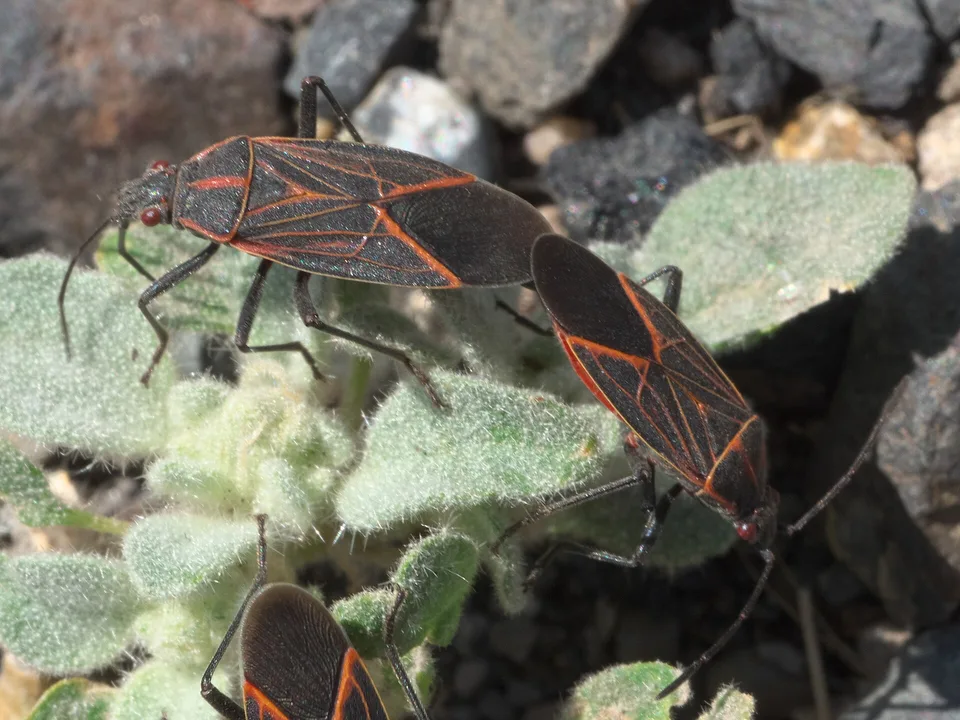
Where boxelder bugs turn up around Kuna
Boxelder bugs feed mainly on the seeds of female boxelder trees, and sometimes on maples and other shade trees. In Kuna, the trees nearby matter more than the age of the house.
- Indian Creek and the greenbelt. Mature trees along the creek and in older yards nearby give the bugs a summer feeding ground. Homes close to those trees often see the fall gathering first.
- Downtown near Main Street. Older homes and brick commercial buildings have warm masonry, aging window frames and trim gaps, all of which suit insects looking for a winter hideout.
- New homes beside former farm ground. A brand new house can still get visitors. Windbreak and farmstead trees on neighboring acreage may host bugs that fly over to fresh siding in fall. A tidy yard does not keep them away, because they travel well.
- Farm and acreage outbuildings. Barns, shops and sheds with open eaves and loose siding give them plenty of places to tuck in.
The open sage ground toward the Snake River has few of the trees they rely on. In Kuna, these bugs are mostly a story of irrigated yards, shade trees and the buildings beside them.
Telling a boxelder bug apart
- Size and color. Adults are about half an inch long, narrow and mostly black. Thin red or orange lines trace the area behind the head and the edges of the wings. Young nymphs are smaller, wingless and bright red.
- Habits. They gather in loose crowds on sun-warmed siding, fences, rocks and tree trunks from late summer into fall. Later they squeeze into window frames, vents and gaps around trim.
- Indoor effects. Bugs hidden in walls and attics may wander into rooms on mild winter days. Crushed bugs give off an unpleasant smell, and their droppings can leave small stains on curtains, light walls and fabric. They do not damage the structure of a home, and bites are rare.
University of Idaho Extension and the Pacific Northwest Insect Management Handbook both treat these insects as a seasonal household nuisance. The concern is how many come inside, not damage to rooms.
Signs it’s time to bring in a professional
A few bugs on a fence post are normal in Kuna. Consider a free quote if you notice any of these:
- Large clusters return to the same wall or outbuilding every fall.
- Bugs keep showing up in upstairs rooms, near attic access or around windows over the winter.
- Stains appear on curtains or light surfaces near windows.
- You want gaps sealed in summer, before the autumn movement begins.
Calling in mid to late summer gives a provider the most room to work. Openings are much easier to close before the bugs are already inside the walls.
What licensed boxelder bug work usually involves
Extension guidance is candid about the limits. Spraying inside living spaces does little and is generally discouraged. Exterior treatment on the walls and foundation where bugs gather can cut down on how many get in, but it is not a complete fix. That is why professional work usually combines several steps:
- An inspection for openings. The provider checks window and door frames, siding seams, soffits, corner trim, attic and eave vents, and damaged screens.
- Sealing and screening. The handbook points to caulking, screen repair and screening of soffit, trim and attic vents, ideally in summer before the bugs arrive. University of Idaho Extension recommends fine mesh over vents under eaves and in attics.
- Targeted exterior treatment. Products are applied to the sunny wall areas and foundation edges where the insects collect, at the time they are active, using family and pet safe practices.