
Why fleas can take hold indoors in Kuna
The Pacific Northwest Insect Management Handbook calls fleas nest parasites. The adults feed on warm-blooded animals. Their eggs drop into the host’s resting spot, and the larvae grow there. Larvae don’t bite. They live on dried blood, skin flakes and other debris in bedding, rugs and upholstery. The handbook also notes that fleas can pass tapeworms to animals (PNW handbook). For people, the bites tend to swell and itch for days.
Fleas can take hold in a Kuna household in a few common ways:
- Empty houses. A home sits vacant between owners. Flea pupae resting in the carpet can stay quiet for a long stretch, then hatch together once footsteps and body heat return.
- Mice from nearby fields. In fall, harvest and the irrigation shut-off nudge mice off nearby fields. They may bring fleas into garages, sheds and barns on acreage lots.
- Heated homes. Indoors, warmth keeps the cycle going through Kuna’s cold winters, long after outdoor activity slows.
Tick species found in Idaho and the illnesses they can carry
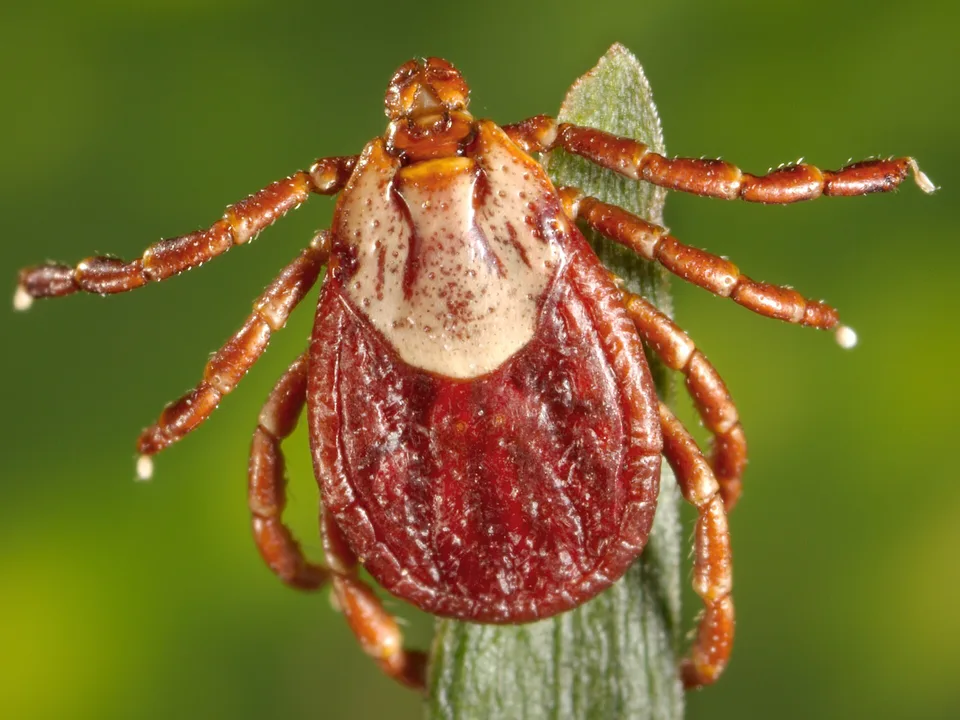
Ticks have no wings and are related to spiders. Most are a fraction of an inch long. They can’t hop or fly. A tick climbs a stem or blade of grass, holds out its front legs, and grabs onto a person or animal brushing past. Entomologists call this questing.
An Ag Proud overview names four ticks seen most often in Idaho (Ag Proud):
- the Rocky Mountain wood tick
- the American dog tick
- the western blacklegged tick
- the brown dog tick
The same overview says most bites happen between May and September.
Idaho’s Department of Health and Welfare lists the tick-borne illnesses that worry state health officials most: tularemia, Rocky Mountain spotted fever and tick-borne relapsing fever (DHW). The CDC adds Colorado tick fever, an uncommon viral illness carried by the Rocky Mountain wood tick in western states (CDC).
DHW also notes that the state does not run disease tests on ticks people send in. If you feel sick after a bite, contact a medical provider rather than waiting on a tick test.
Kuna places where fleas and ticks are more likely
- Open country south of town. Trails toward the Kuna Caves, Swan Falls and the Snake River Canyon cross sagebrush and grassy ground. The Morley Nelson Snake River Birds of Prey National Conservation Area is similar terrain. A dog that runs through brush there can come home with a passenger.
- Indian Creek and canal laterals. Tall grass and weedy banks give questing ticks somewhere to wait.
- New subdivisions. Many sit beside former farm or sage ground. Rodents and other wildlife move along those borders and can carry fleas toward yards.
- Irrigated lawns. Shaded, damp spots close to a house can help flea larvae survive outdoors through a dry summer.
- Older downtown homes. Houses near Main Street that have changed hands can hold dormant flea pupae.
Mown lawns at places like Bernie Fisher Park or Nicholson Park are less likely to hold ticks than unmowed edges. Checking a dog after a walk on the Indian Creek Greenbelt is still a sensible habit.
What health agencies advise after a bite
Ticks. The Idaho Department of Health and Welfare suggests checking yourself, your children and your pets for ticks after coming in from outdoors. It also recommends asking a veterinarian which preventive products suit your animal. Most tick-borne illnesses start with fever, and some cause a rash. DHW notes that treating them early lowers the chance of complications. If you feel unwell in the days or weeks after a bite, call a doctor.
Fleas. Flea bites mostly cause itchy, swollen welts. Fleas can also spread tapeworms to pets.
Central District Health serves Ada County, including Kuna, and shares general public health guidance. Nothing on this page replaces medical or veterinary advice.
Signs it’s time to bring in a professional
A free quote makes sense when:
- fleas keep biting people or showing up on socks after your veterinarian has already treated the pets
- a newly purchased Kuna home turns out to have fleas in the carpet
- mice or other animals have been nesting in a garage, crawl space or outbuilding, and fleas followed
For ticks, the order matters. Check with a doctor or veterinarian first. Then ask a licensed professional about the yard if ticks keep turning up near the house.
What a licensed visit for fleas or ticks often covers
- Coordination with your veterinarian. The home and the animal have to be handled on the same schedule, or fleas simply move back onto the pet.
- A close look at likely spots. The technician checks pet resting places, rugs, furniture, crawl spaces and outbuildings for eggs, larvae and pupae, plus any signs of rodents that could be carrying fleas.
- Labeled treatment of indoor and outdoor areas. Products are labeled for fleas, and a return visit is often planned because pupae hatch over time rather than all at once.
- A yard review for ticks. This means weedy borders, tall grass, and the edges where a lot meets a canal bank, field or sage ground. The technician can explain which conditions give questing ticks a foothold. A bite still calls for a medical opinion.