
Why They Show Up in Kuna
The City of Kuna describes this land as a sage desert before the New York Canal opened in 1909. Water changed that. Today canal laterals, Indian Creek, the greenbelt and thousands of irrigated yards hold damp soil all summer. Even when the valley’s official weather station records hot, dry weather, the soil under your bark mulch stays damp.
Newer homes built on former farm and sage ground often get new sod, drip lines and deep mulch right up against fresh concrete. Millipedes and pill bugs thrive in that kind of setting. Downtown, some older brick buildings near Main Street have cool crawl spaces or basement corners that hold moisture. On acreage, stacked lumber, old hay and outbuilding floors give them shelter.
Fall often brings the most complaints. When irrigation water is shut off and nights turn cool, millipedes in particular can roam in noticeable numbers. They cross patios, gather at thresholds and slip under garage doors.
Identifying What You Found
- Millipedes have long, rounded or slightly flattened bodies, usually brown or black. Most body segments carry two pairs of short legs. They move slowly and curl into a tight spiral when handled. They eat rotting leaves, roots and other decaying plant matter.
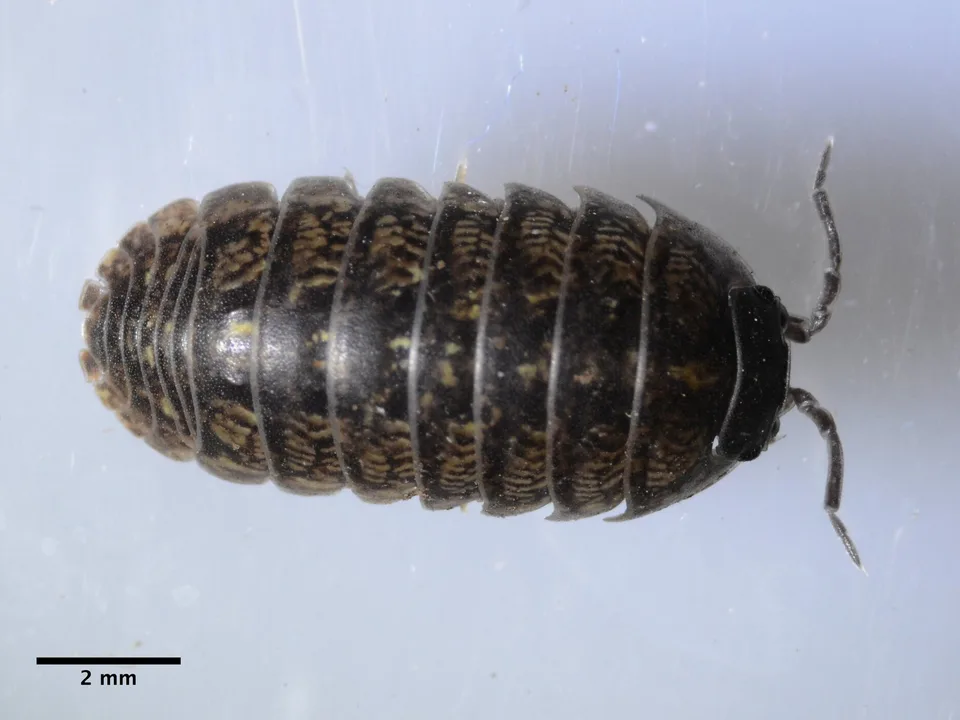
- Pill bugs are small, gray and oval, with armored plates and seven pairs of legs. When disturbed they roll into a ball. They are crustaceans, more closely related to shrimp and crabs than to insects, and they need moisture to breathe.
- Sowbugs resemble pill bugs but are flatter. They have two tiny tail-like points at the rear and cannot roll up.
- Centipedes are often mistaken for millipedes. They have one pair of legs per segment and long antennae, run quickly, and hunt other small creatures.
University extension sources treat millipedes, pill bugs and sowbugs as nuisance pests. They do not bite or sting people or pets, and they do not damage wood, wiring or a sound foundation. Some millipedes give off a defensive fluid that can irritate skin or stain light surfaces. Pill bugs and sowbugs may chew tender seedlings or fruit resting on wet soil. Mostly, though, finding them is a sign of moisture.
Signs It Is Time for a Professional Look
Seeing a few on the garage slab after the sprinklers run is normal in a watered Kuna yard. A professional visit makes more sense in these situations:
- They show up indoors week after week.
- Dozens gather at entry doors or in window wells.
- A basement or crawl space seems to hold them.
- The soil against your foundation never seems to dry.
- A fall wave keeps coming long after irrigation has stopped.
What Licensed Work Typically Covers
- Confirms the animal. Millipedes, pill bugs, sowbugs and centipedes call for different approaches, so correct identification comes first.
- Surveys the damp zone. The Pacific Northwest Insect Management Handbook stresses correcting wet conditions and hiding places before relying on any treatment. A technician checks for sprinkler heads hitting siding, deep mulch against the slab, window wells, crawl-space vents, leaf buildup and garage door seals.
- Checks entry points. This includes thresholds, gaps under doors and foundation cracks.
- Treats only where needed. Any treatment is targeted at the problem areas and applied according to the label. Treatments are family and pet safe.
- Explains the findings. You get a plain-language summary of what was found, so you know what is driving the activity at your home.