
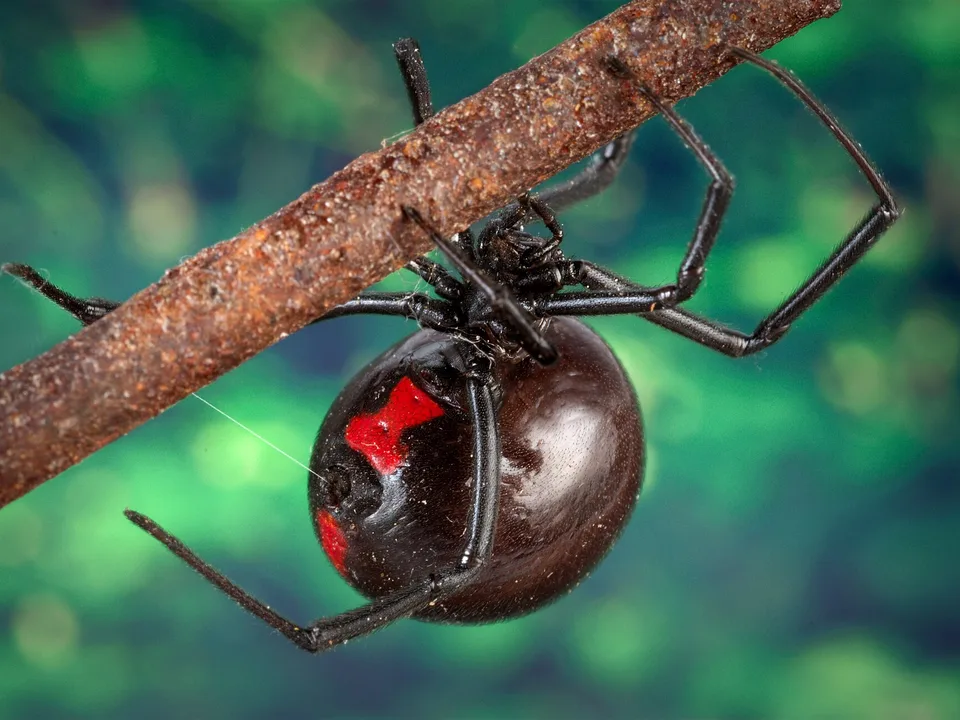
In southern Idaho, that spider is the western black widow. It is the glossy black spider with the red hourglass shown on this page. Brown recluses are not established here, and hobo spiders are no longer regarded as dangerous biters.
What changes from one Kuna property to the next is where spiders settle and how many insects they have to eat.
Where Kuna gives spiders shelter
New homes on former farm and sage ground. Building sites leave stacks of lumber, block and landscape rock behind. Window wells, irrigation valve boxes and fresh rock borders add more dry, undisturbed gaps. Black widows prefer exactly that kind of cover.
Indian Creek, the greenbelt, canal laterals and irrigated lawns. Moving water and green grass support midges, mosquitoes and other small insects through summer. Web-building spiders follow that food supply, especially to porch lights, fences and eaves that face the water.
Downtown near Main Street. Older homes and brick buildings near the railroad often have crawl spaces, basements and settled cracks. Cellar spiders and house spiders are common in these spaces, and a widow may tuck into a low, quiet corner.
Farm and acreage outbuildings. Sheds, barns, pallets, hay and parked equipment can sit untouched for months, which gives spiders long stretches without disturbance.
The dry sage edge to the south. In open desert ground, black widows use rocky hollows and old burrows. Homes that back onto sage may find them in rock walls, block stacks and under decks.
Late summer and fall. Male hobo spiders wander from late summer into fall. That overlaps with the end of harvest, cooler nights and the fall irrigation shut-off, so garages and lower floors often see more spiders. Coolers, canopies and folding chairs pulled out of storage for Kuna Days or a park picnic are another common place to find a widow.
Sorting out the spiders you are likely to see
| Spider | Where it tends to turn up in Kuna | What to know |
|---|---|---|
| Western black widow | Rock borders, block and lumber stacks, valve boxes, sheds, stored outdoor gear, under decks | The female is glossy black with a red hourglass beneath the abdomen. Its web looks tangled and irregular. It stays hidden and bites mainly when trapped against skin (PNW handbook). |
| Hobo spider (funnel-web group) | Garage floors, basements, window wells and ground-level rooms | It builds a flat sheet of web that narrows into a funnel. Males roam from late summer into fall and stay near floor level. The handbook finds no scientific support for claims of flesh-damaging bites. |
| Yellow sac spider | Walls and ceilings indoors, often seen at night | This pale, active hunter roams instead of sitting in a web. The handbook lists it as a species of medical interest, though confirmed bites in the Pacific Northwest are rare. |
| Cellar spiders, jumping spiders, orb weavers | Window frames, eaves, fences and porch lights, including homes along the greenbelt | These are everyday hunters and web builders and are harmless to people. Orb weavers like spots near outdoor lights where moths gather after dark (PNW Pest Press). |
Markings can differ from one spider to the next, even within the same species. Color is not a reliable way to tell spiders apart, so a careful identification is worthwhile whenever a bite is in question.
Bites, real risks and common myths
- Western black widow bites are rare, but they deserve attention. The venom acts on the nervous system and can cause symptoms throughout the body. The Pest Press flags small children, elderly people and anyone with hypertension as at greater risk. After a suspected bite, call a health-care provider promptly. Get emergency care for intense pain, breathing difficulty or symptoms that keep getting worse.
- Hobo spider bites are not considered a medical danger. University of Idaho Extension’s Hobo Spiders in Idaho reflects this current view. Many sores blamed on spiders turn out to have other causes, including bacterial infections.
- Brown recluses are not native to Idaho or the Pacific Northwest. The handful of confirmed regional cases were tied to people who arrived from areas where this spider is established.
The information here is general and does not replace advice from a doctor.
Signs it is time for a professional
A professional visit makes sense in a few situations:
- Webs rebuild in the same eaves or window corners week after week.
- A spider matching the black widow description keeps appearing near a play set, patio, sandbox or stored gear.
- Wandering spiders keep showing up inside once fall arrives.
- You simply cannot tell what you are looking at.
If someone may have been bitten and feels unwell, get medical care first and think about the spiders later.
How licensed spider service usually works
The PNW handbook and the School IPM Consortium both point out that treatment by itself seldom holds, because spiders from the surrounding yard keep moving back in. That matters in Kuna, where many homes border fields, canal banks or open sage. A licensed visit typically combines several steps:
- Naming the spider first. A western black widow near a play area calls for a different plan than cellar spiders in a basement.
- Looking at what feeds them. The technician points out what keeps insects coming, such as outdoor lighting, dense plantings against the foundation and damp spots near laterals or sprinklers. Without that food supply, fewer spiders stay.
- Removing webs and egg sacs. This covers eaves, window frames and openings. Treatment then targets resting spots such as garage corners, crawl-space vents and window wells.
- Checking how spiders get in. The technician looks for gaps under doors, torn screens and openings around utility lines, then recommends sealing. These are the exclusion measures the School IPM Consortium describes.
- Paying close attention to widow cover. That includes woodpiles, block stacks, outbuildings and the ground around play equipment.
Ask that any treatment used around your home be family and pet safe.