
How Kuna’s mix of farm ground and town shapes fly trouble
Farm edges and acreage. When irrigation turned Kuna’s sage desert green, it brought fields, livestock and outbuildings, and those still ring the town. Horse stalls, chicken coops, compost heaps and wet bedding are classic breeding spots for house flies. From there, flies move easily to the newer houses that now border farm ground.
Irrigated lawns and soil. Cluster fly larvae develop as parasites of earthworms, and moist, irrigated yards and fields support earthworms through the growing season. That helps explain why cluster flies can turn up in a brand-new home just as readily as in the older brick buildings near Main Street and the railroad.
Summer gatherings. Kuna Days in August and picnics at Bernie Fisher Park, Nicholson Park and along the Indian Creek Greenbelt draw people outside in the warmest weeks. In that heat, food scraps and overflowing bins attract house flies, both at home and in the park.
The dry south side. Open sagebrush toward the Snake River Canyon offers flies little moisture or decaying material. Fly activity gathers instead where water and decaying matter meet: yards, barns, kitchens and trash areas.
Telling the three flies apart
- House flies are medium-sized and gray, with four dark stripes on the thorax. They land on food, counters and garbage. Their larvae (maggots) grow in manure, garbage, pet waste and wet, rotting plant material.
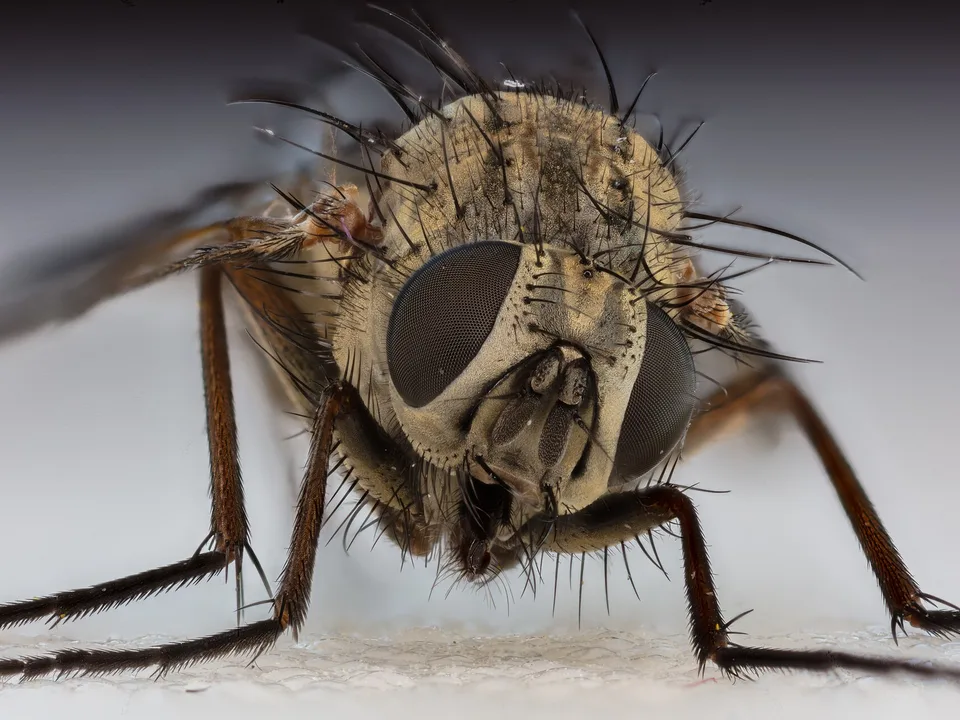
- Cluster flies are a little larger and slower. Their bodies carry fine golden hairs, and they hold their wings overlapping when at rest. They gather in groups at windows, in attics and inside wall voids. They don’t breed indoors; the house is only a winter shelter.
- Fruit flies are tiny, tan and often red-eyed. They hover around ripe or fermenting produce, sticky residue, recycling and drains, and they can finish a generation in a matter of days in warm rooms.
University extension guidance, including the Pacific Northwest Insect Management Handbook, treats each of these flies separately. The breeding site and the route into a home differ so much that one method won’t fit all three.
What the health agencies say
The CDC describes house flies as filth flies. They feed and lay eggs on waste, then land on people’s food and kitchen surfaces, and that habit can carry disease-causing germs from one place to the other. That’s why house flies inside the home are treated as a sanitation concern rather than just an annoyance.
Cluster flies and fruit flies are mostly nuisance pests, though a steady fruit fly population still means something is fermenting somewhere. Central District Health serves Ada County, including Kuna, for general public health questions. This page offers general information and is not medical advice.
Signs it’s time for a professional
- House flies keep turning up indoors every day, even with doors and screens closed.
- You see maggots near trash bins, pet areas, coops or barns, and the problem keeps coming back.
- Dozens of sluggish flies collect in upstairs rooms or the attic each fall, or on warm days in late winter.
- Fruit flies linger for weeks after you’ve removed the produce you suspected.
Activity that keeps coming back usually means a breeding source or an entry gap hasn’t been found yet.
What licensed fly service usually involves
- Identification first. The technician confirms which fly is present, since that decides where to look.
- A source search. For house flies, that means checking trash areas, pet waste, compost and any livestock or outbuilding areas on acreage lots. For fruit flies, it means kitchens, pantries, recycling and drains.
- Exterior and attic checks for cluster flies. That includes sunny wall faces, eaves, vents, siding gaps and the attic spaces where the flies spend the winter.
- Targeted treatment and exclusion. Products and methods are chosen for the species and applied where they matter. If breeding conditions can’t be cleared in one visit, a follow-up is planned.