
How Kuna homes, garages and outbuildings feed these insects
Kuna has grown fast. Many families in newer neighborhoods on former farm and sage ground use the garage as a second pantry, with bulk dry goods, pet food and bird seed stacked along the wall. Summers here are hot and dry, and a closed garage gets warm. Warmth speeds up insects that already live inside stored grain.
On acreage and farm edges around town, barns and sheds often hold livestock feed, chicken scratch and seed. A neglected sack can keep a population going and send adults toward the house. Downtown, some older brick buildings and homes near Main Street have attics, eaves and wall voids. Old bird nests and dead insects collect in those spaces, and carpet beetles feed on that material.
In Kuna, an outbreak usually points to an infested package or a forgotten spill. It rarely means a dirty kitchen.
Telling the common culprits apart
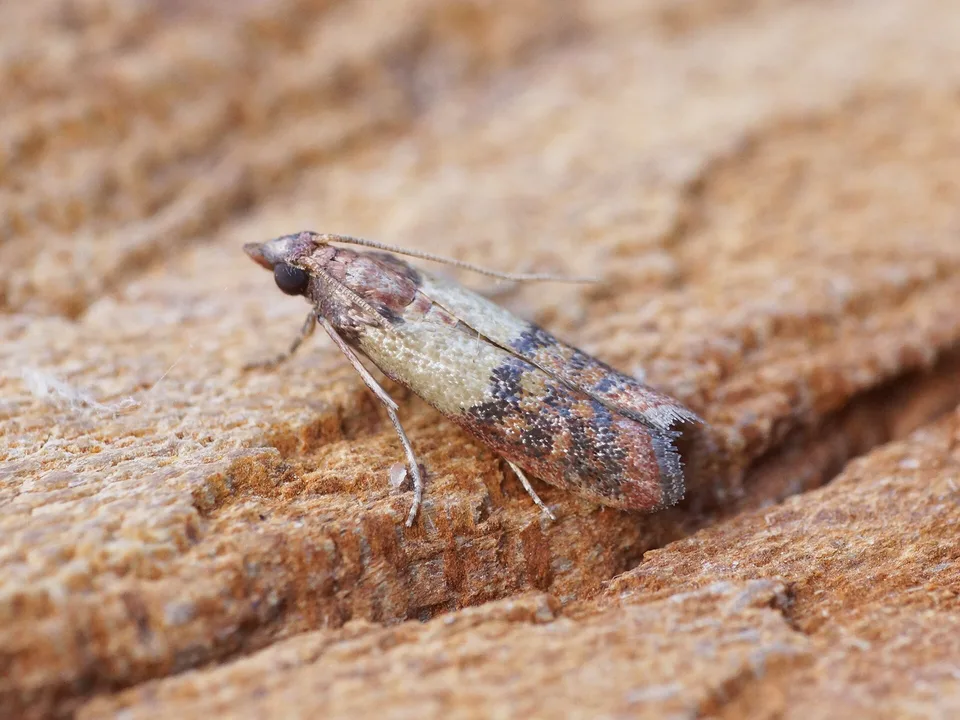
- Indianmeal moths are small moths with two-toned wings, coppery toward the tips. Their larvae spin silk in grain, nuts, dried fruit, chocolate, bird seed and pet food. Clumped, webbed food is the giveaway.
- Flour and grain beetles are tiny, slender beetles in reddish brown or dark brown. The group includes red and confused flour beetles and sawtoothed grain beetles. They live in flour, cake mixes, cereal, crackers and pasta.
- Drugstore and cigarette beetles are rounded, humpbacked and light brown. They bore into spices, dried herbs, dry pet treats and even paper packaging.
- Carpet beetles are round adults with mottled or dark shells. Their larvae are fuzzy, bristly and carrot shaped. They feed on animal fibers, lint, pet hair and dead insects, especially along baseboards, in closets and on sunny windowsills.
The Pacific Northwest Insect Management Handbook puts stored-product insects and fabric pests in separate groups, because each needs its own source search (PNW handbook). University extension guidance generally treats these insects as nuisance and contamination pests rather than disease carriers. Some people do get skin irritation from carpet beetle larval hairs.
Why the source matters more than the bugs you see
Once one package is infested, the insects move into nearby boxes and bags. Spilled flour in a shelf seam, kibble behind a storage bin or a split bag of feed in a shed can restart the problem after the first item is thrown out.
Carpet beetles work the same way with different food. A forgotten wool blanket, a pile of dead flies in a window track or an old bird nest near the eaves is enough. Killing the adults on the windowsill does little if the larvae keep feeding somewhere else. That is why a good visit starts with identification and a careful look at storage areas.
Signs it is time to bring in a professional
Consider a professional visit in any of these situations:
- Moths or beetles keep showing up after the obvious items are gone.
- Insects appear in several rooms, or in both the house and the garage.
- Stored feed in an outbuilding seems to be part of the problem.
- Wool, rugs, upholstery or other animal-fiber items show holes or bare patches.
A trained technician knows where these insects hide and can confirm which species you have.
Describe what you are seeing and request a free quote. Requests are passed to a licensed local provider.
Your request is shared with a licensed local provider, so they can reply. This guide does not sell your information.
What licensed service typically includes
- Accurate identification: moths, flour beetles, drugstore beetles and carpet beetles each call for a different approach.
- A source search: the technician checks pantry shelves, garage storage, pet and bird food, outbuilding feed and, for carpet beetles, closets, vents, windowsills and attic edges.
- Removal of infested material: the technician points out what is infested and, if needed, treats the cracks and voids where stray larvae shelter.
- Follow-up guidance: the provider explains what to watch for so a new purchase does not restart the cycle. Licensed technicians handle any product use.